
A camper-van insulation plan starts before the first piece is cut. Decide which surfaces you will cover, how much space sits behind the panels, and how the layers will work together. Then turn that plan into a roll length.
This article brings together the material, coverage and installation-planning information in Tec Vanlife’s complete 3M Thinsulate SM600L guide. It explains how to use the estimates without treating them as a cutting template, what compressed packaging means, and where Duck Liner fits into the assembly.
Start with the surfaces, not the shopping quantity
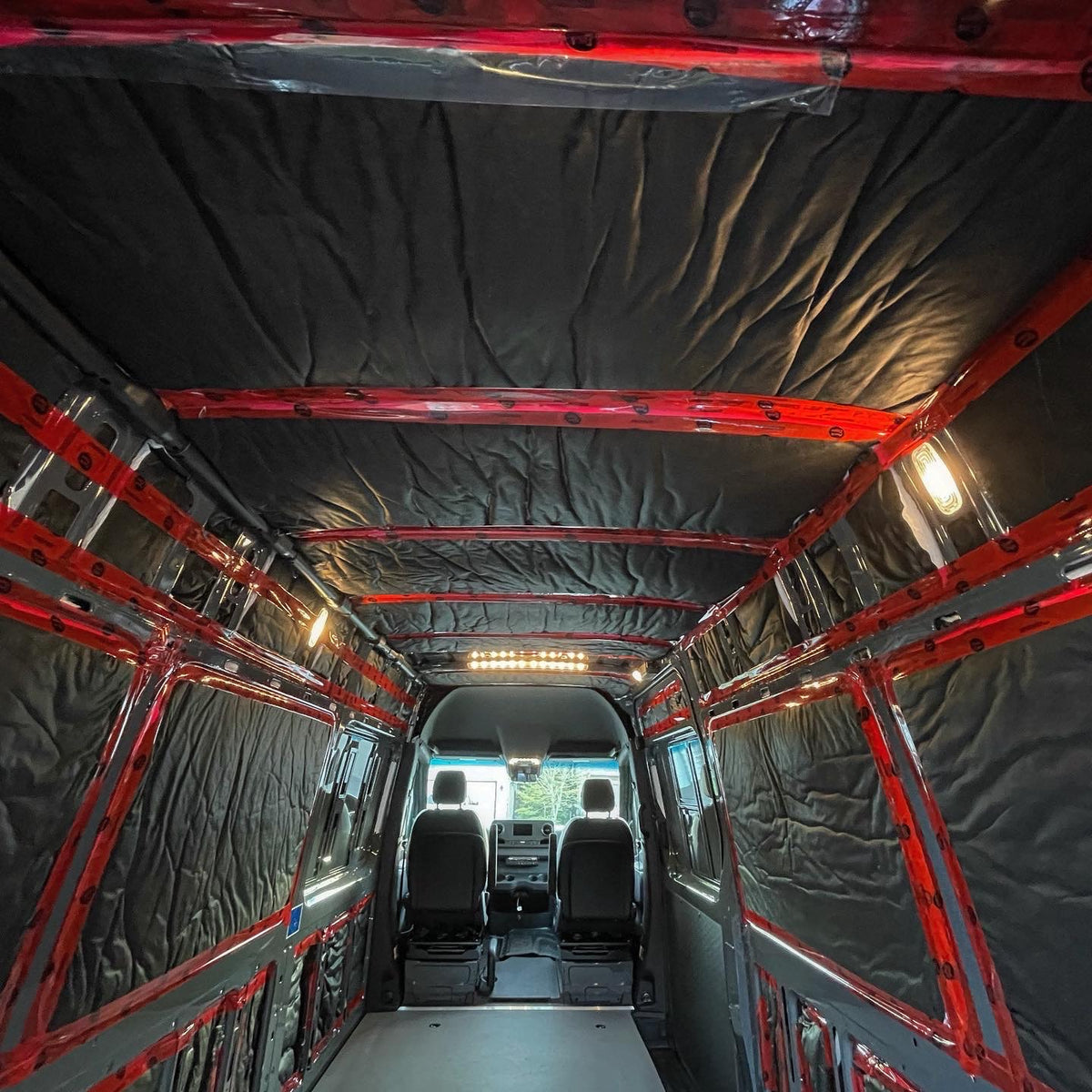
Write down what the insulation plan includes: walls, ceiling, doors and any accessible cavities. Measure those areas, note the openings, and consider how the material can be cut around the vehicle’s shape. Hardware still needs its space; a roll-area calculation does not decide the cutting layout for you.
Keep the floor on a separate list. The vehicle estimates below concern walls and ceiling. A floor that carries people, cabinets and other loads needs its own material and structural plan.
- Measure the surfaces included in your particular build and subtract openings.
- Record the door and window layout rather than assuming that every van with the same wheelbase uses the same quantity.
- Allow for cuts and offcuts when turning gross material area into an installation plan.
- Check available cavity depth and access around vehicle hardware.
Separate the jobs of sound absorption, insulation and moisture management
3M Thinsulate SM600L is a lightweight fibrous automotive acoustic absorber used in van walls, ceilings, doors and irregular cavities. It provides a flexible thermal-insulation layer and helps absorb airborne sound. The finished result depends on the complete vehicle assembly, rather than on one material alone.
Its hydrophobic fibres resist moisture, but that does not remove the need to consider ventilation, exposed metal and moisture movement through the build. Moisture resistance in a fibre is not a promise that the finished van will stay free of condensation.
Why Duck Liner is a different layer
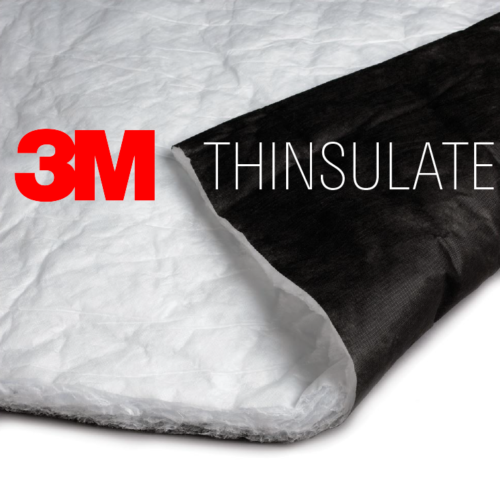
Duck Liner is a foil-faced, closed-cell sponge neoprene material with an adhesive backing. The guide describes the 3/8-inch layer as providing thermal separation over the metal it covers and helping manage transmitted vibration and road noise. That role complements the flexible fibrous insulation placed in the cavities.
| Material | Planning role | What to check |
|---|---|---|
| 3M Thinsulate SM600L | Flexible fibrous acoustic and thermal insulation for walls, ceilings, doors and cavities. | Coverage, cavity depth, access and the installation method. |
| Duck Liner | An adhesive-backed, foil-faced closed-cell layer nearer the prepared vehicle body. | Surface preparation, assembly compatibility and whether the foil faces an air space. |
Use the nine-van table as a starting estimate
The following figures are Tec Vanlife’s merchant planning estimates. They cover walls and ceiling and assume windows in the sliding door and rear doors. They are not guaranteed fit quantities. Compare them with your measured scope before ordering.
| Van configuration | Roll length | Gross material area |
|---|---|---|
| Sprinter 144 high roof | 50 linear ft | 250 sq ft |
| Sprinter 170 high roof | 60 linear ft | 300 sq ft |
| Sprinter 170 extended high roof | 70 linear ft | 350 sq ft |
| Transit 130 | 40 linear ft | 200 sq ft |
| Transit 148 mid/high roof | 50 linear ft | 250 sq ft |
| Transit 148 high roof extended | 60 linear ft | 300 sq ft |
| ProMaster 136 high roof | 40 linear ft | 200 sq ft |
| ProMaster 159 high roof | 50 linear ft | 250 sq ft |
| ProMaster 159 high roof extended | 60 linear ft | 300 sq ft |
For a van with neither sliding-door nor rear-door windows, the guide adds 10 linear feet to its starting estimate. That is a specific adjustment for those window locations, not a universal allowance for every layout. A mixed window arrangement needs individual measurement.
Use the interactive vehicle and window estimator to review that starting point. Keep your actual openings, door scope, offcuts and installation method in the final calculation. For the existing quantity-focused article, see How Much Thinsulate & Duck Liner Do I Need for My Camper Van?
Convert area into the length sold
SM600L is 60 inches, or 5 feet, wide. One linear foot of that roll is therefore a piece 1 foot long and 5 feet wide: 5 square feet of gross material.
For example, 50 linear feet supplies 250 square feet before cutting. Gross area describes how much material is on the roll; it does not guarantee an equal area of finished coverage after fitting pieces around openings and curves.
On the product page, one pack contains the selected length. Two packs contain twice that total length. Check both the length option and pack quantity rather than reading the quantity box as a number of individual feet.
Understand the difference between package size and installed loft
Tec Vanlife is an official 3M distributor and uses specially engineered rolling machinery to compress the material evenly into compact rolls for shipping. The equipment shown here is the actual roll-preparation equipment used by Tec Vanlife. Compact packaging does not reduce the purchased material length or quantity.

After unpacking, compressed material may gradually regain loft. The guide lists SM600L’s nominal thickness as 42 mm, approximately 1.65 inches, based on the 3M technical data sheet. Nominal thickness is a planning reference; recovered loft and installation conditions vary.
Check the space available behind your panels and use the installation method appropriate to the vehicle. The guide places the white fibre side toward the vehicle body and the black scrim toward the interior. Review the official 3M SM600L technical data sheet alongside the assembly plan.
Plan the Duck Liner and Thinsulate assembly together
Tec Vanlife’s typical sequence runs from the vehicle shell toward the living space:
- Prepared van metal
- Adhesive-backed Duck Liner
- 3M Thinsulate SM600L
- Interior panel
In that arrangement, Duck Liner is nearer the metal, rather than a layer simply laid over the Thinsulate. Its adhesive backing calls for a clean, dry, properly prepared surface and firm rolling for consistent contact. Confirm the assembly and adhesive compatibility for the individual build, and leave the required space around vehicle hardware.
Foil needs an air space for a radiant-barrier effect
Do not count a reflective benefit just because foil is present in the wall. To contribute a radiant-barrier effect, the reflective face needs to face an air space. When the foil is covered by bonded insulation, that benefit should not be assumed. The U.S. Department of Energy explanation of radiant barriers linked in the guide provides context for this distinction.
The material pairing is not a guarantee of a condensation-proof van or a complete vapour barrier. Ventilation and moisture management remain part of the design. For the original assembly discussion, open the guide’s Duck Liner layer-order section.
Questions to settle before choosing a length
Can the vehicle table replace measuring the van?
No. Use it to establish a starting quantity, then check the walls, ceiling and any doors included in your scope. Openings and the cutting layout affect the final requirement.
Is floor insulation included in those quantities?
No. The table estimates walls and ceiling. Treat a load-bearing floor as a separate material and structural decision.
Does a compact roll mean less insulation was supplied?
No. The rolling process changes package size, not the material quantity purchased. Plan around the selected roll length and the material’s loft after unpacking.
Does moisture-resistant insulation replace ventilation?
No. Hydrophobic fibres are one material characteristic. Ventilation, exposed metal and the rest of the wall assembly still need attention.
Should Duck Liner sit on top of the Thinsulate?
The guide’s typical sequence places adhesive-backed Duck Liner nearer the prepared van metal, with SM600L between that layer and the interior panel. Check compatibility and the complete assembly rather than reversing the layers by assumption.
Where can I check pack lengths or discuss full rolls?
Review the current SM600L product options and the guide’s length selector. For full rolls or builder quantities, use the full-roll and bulk-quantity quote form. The quote process confirms pricing, availability, shipping charges and delivery arrangements for that request.
Turn the plan into an order
Bring together your measured coverage, the window adjustment where it applies, the chosen layer assembly and the selected pack length. Tec Vanlife’s complete interactive guide keeps the estimator, product selector and quote form in one place.
You can also review the Thinsulate and Duck Liner bundle, then consult the current shipping policy and return policy. Shipping options and charges depend on the order and delivery address; use the current store information or a confirmed quote for those details.